
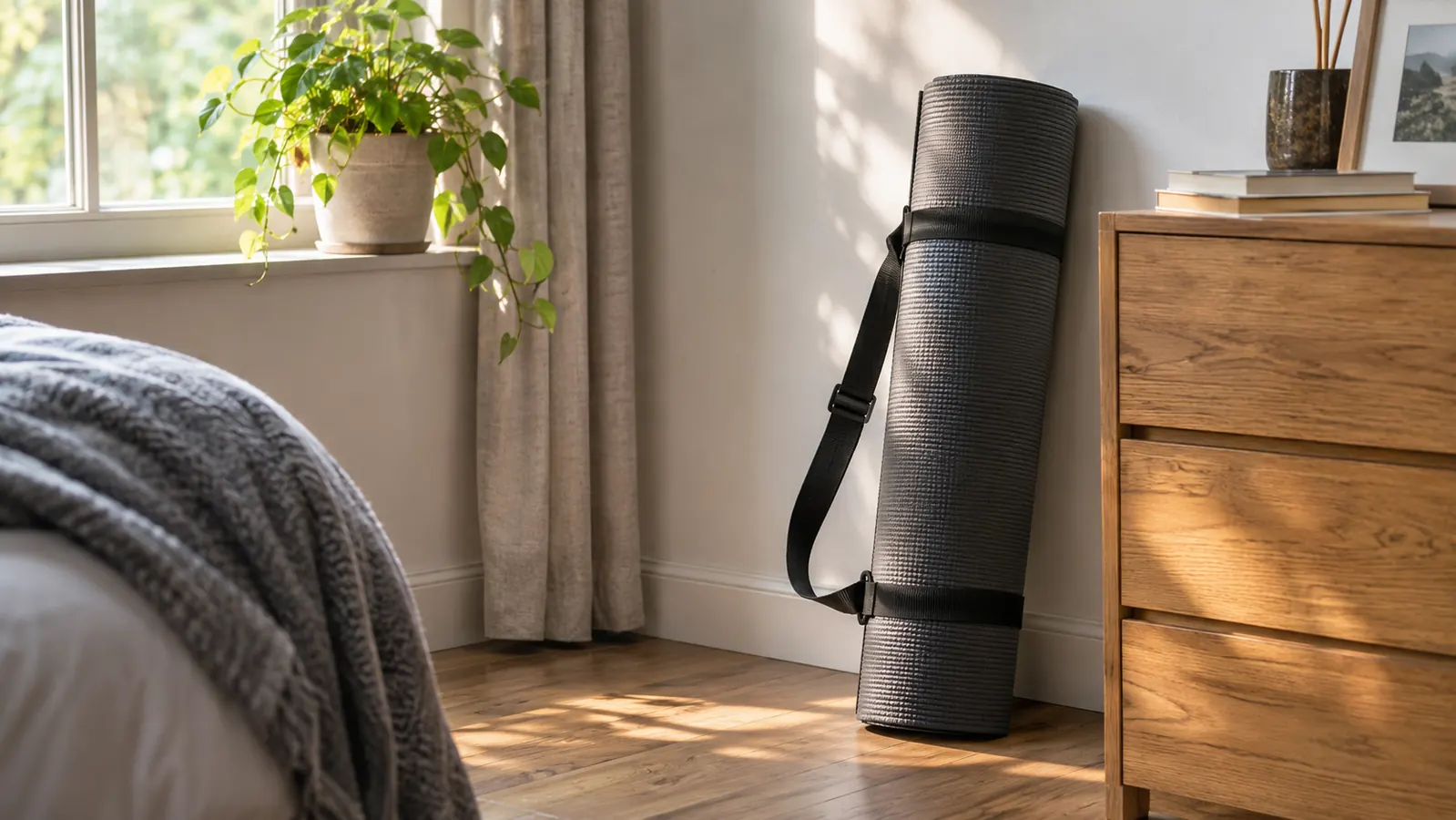
The studio mat was thin enough that I could feel the floorboards through it. By the third exercise my tailbone had found the hardwood and my knees were filing complaints, and I spent the rest of the hour thinking about my spine instead of my breathing. That is a poor trade for a Saturday morning.
I am 48. I walk most mornings with Pepper, I do short strength workouts in the spare room three or four times a week, and I go to exactly one Pilates class. I am not flexible in any way anyone would photograph. But I do know the difference between a mat that holds you up and a mat that just lies between you and the floor.
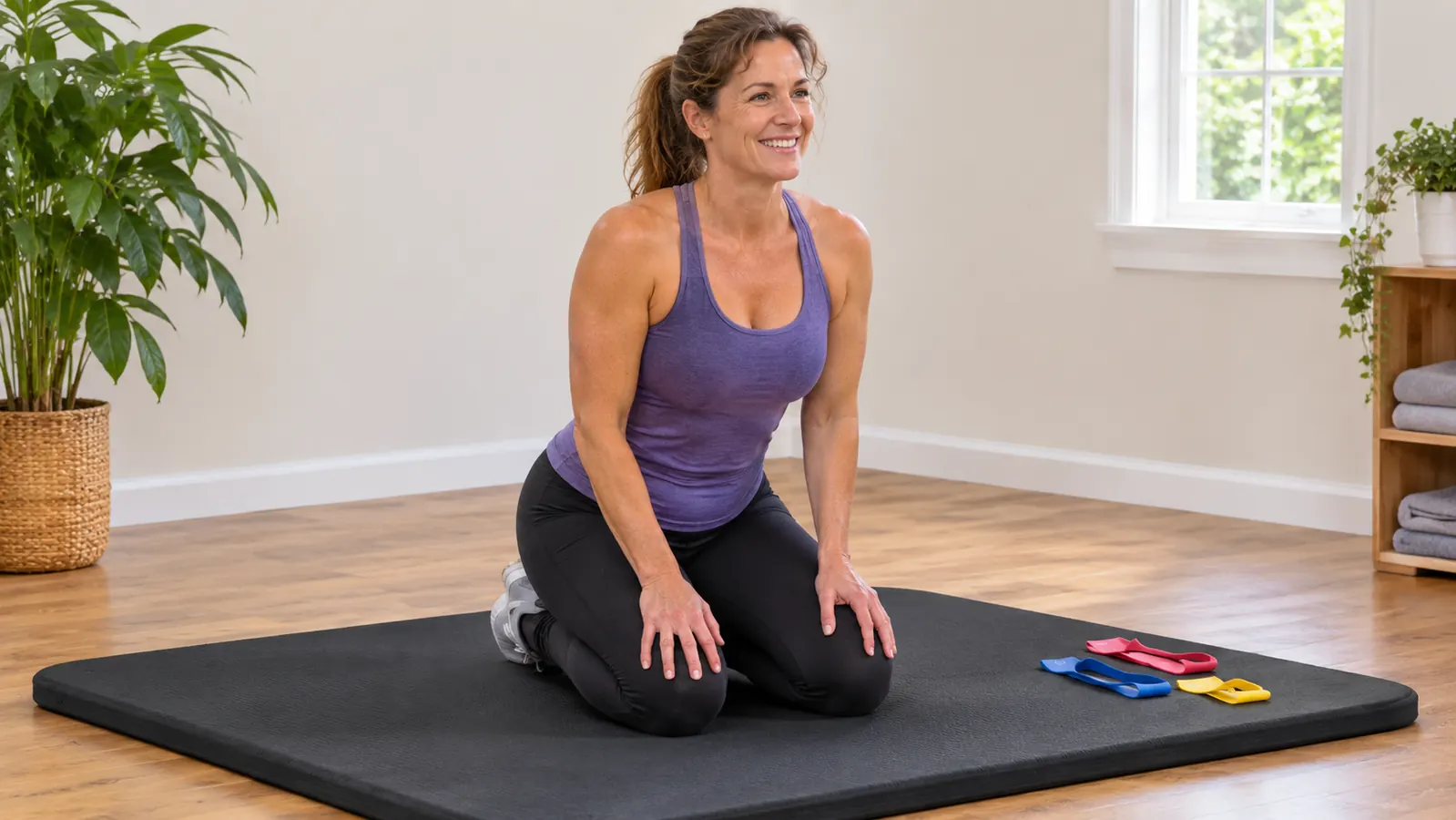
That afternoon I ordered the Gaiam Thick Yoga Mat. Ten millimeters of NBR foam, 72 inches long and 24 inches wide, with an adjustable strap. Nine months later it lives rolled in the corner of the spare room and rides on that strap to class every Saturday. It is the only mat I have bought since, which for me is the review.
The honest part first, because I would rather you hear it from me: it smelled like a new tire for the first two days. The listing says 24 to 48 hours and that is roughly what I got. Standing balance work on foam this thick also has a small wobble to it. I still carry it to class every week.
I had tried the cheap route first. A thin mat from a big box store that slid across the studio floor and left my knees sore. A towel folded double, which is not a mat and everyone in the room can tell. The thickness is the whole point and I had been talking myself out of it for a year.
The first Saturday I took it to class, the hour felt shorter. Not because the exercises changed, they did not, but because I stopped negotiating with the floor. When you are not bracing, you can actually follow the breathing cues.
Ten millimeters is the reason I get through a full hour now without once thinking about my tailbone.
The mat that ended the tailbone conversation
Ten millimeters of NBR foam, 72 by 24 inches, and an adjustable strap that gets it to class. It is the one I carry every Saturday.
Amazon Check today's price on Amazon →The knees are the part nobody warns you about. Kneeling work on a thin mat means you spend the series shifting from knee to knee, and you are not really doing the exercise anymore. On the Gaiam I can kneel through the whole sequence and stay where I am put. I used to fold a towel under each knee. It moved.
It also stays where I put it. The thin studio mats walked across the floor under me every time I shifted my weight. This one sits still on the wood, and it has never once slid out from under a plank.
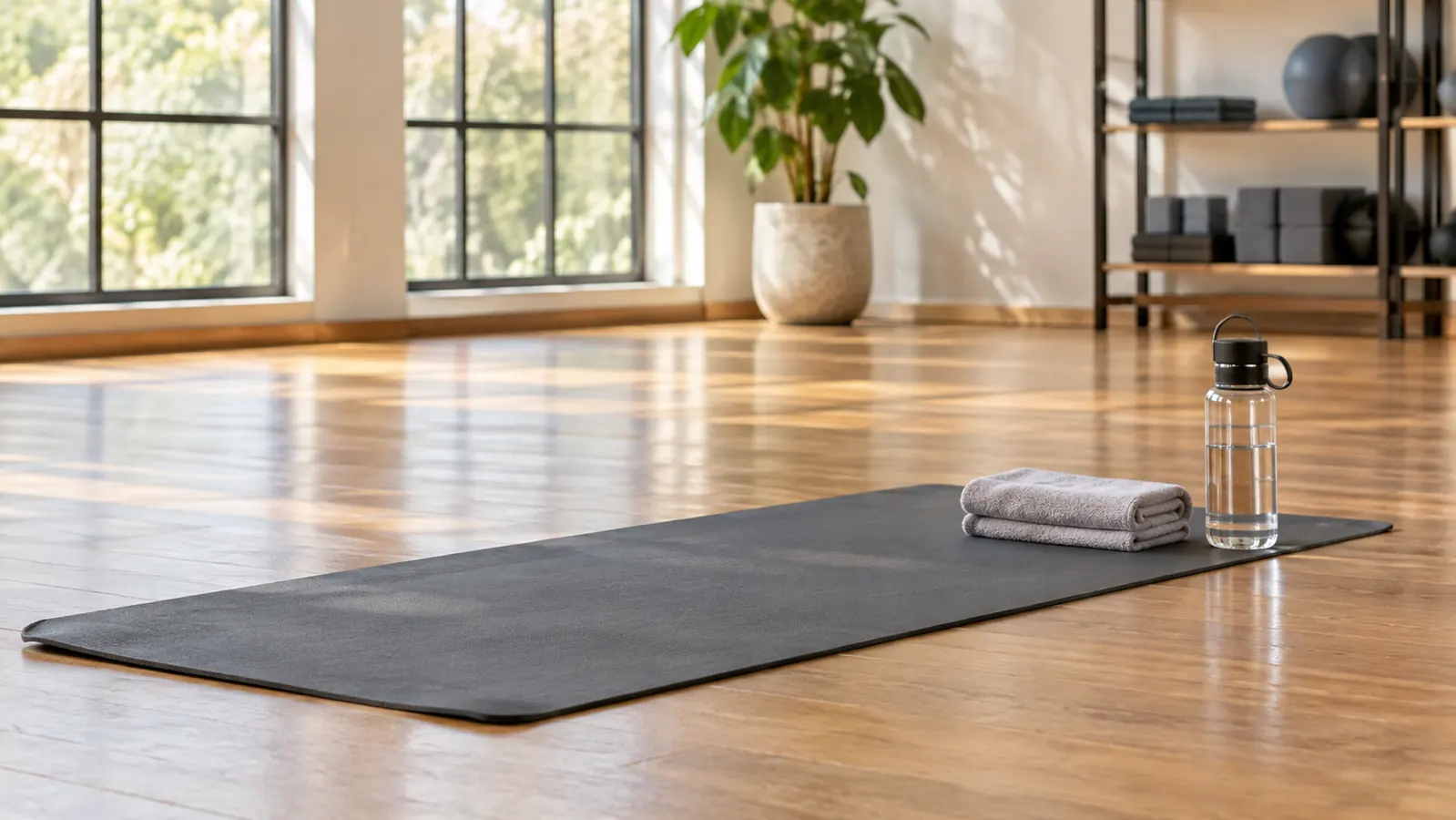
Carrying it is not a hardship. It weighs 1.27 kg, light enough to loop over a shoulder on the walk in from the car, and the strap cinches so it does not unroll across the back seat. The strap is adjustable, which matters if you are shorter or taller than the person next to you. It is not a mat that folds into a tote bag. It goes on your shoulder or under your arm and that is that.
The care instructions say hand wash only, so it does not go in the machine. After class I wipe it with a damp cloth, hang it over the banister for an hour, then roll it up. Nine months in, the foam has not crumbled at the edges the way borrowed mats at the studio have.
In the spare room it doubles as the floor for my band work. The Fit Simplify loops live in a basket and I use the light and medium ones for glute bridges and clamshells, and the foam is forgiving under a hip bone on carpet. Before this I was doing clamshells on the carpet and feeling every fiber of it. That is all I ask of a mat at home.
The tradeoff is balance work. Standing on 10mm of soft foam is not the same as standing on a firm surface, and tree pose on it feels like standing on a pillow. I found that out in my second week, in front of a room, which is the usual way. If your class is mostly standing balance, this is the wrong mat and I would tell you so to your face. If your class is mostly floorwork, it is the right one.
What I'd Tell You If We Were Sitting at My Kitchen Table
I would tell you to buy thickness before you buy anything else, if your class is on a hard floor and your knees or your tailbone complain. I would tell you to check the length against your own height, because mats are often shorter than people expect, and 72 inches is generous for me at five foot six but may not be for a taller friend. I would tell you to unroll it in the garage for two days before you take it anywhere, because the smell is real and it does fade. And I would tell you not to expect this mat to make you better at Pilates. It removes a distraction. The work is still yours. A mat is not a personality. It is a surface, and you want the one that stops you thinking about the surface.
The one thing I would not do is buy it for balance practice, or for a class where you stand the whole hour. A Gaiam mat this thick is a cushion, not a platform, and those are different jobs. If you want it for both, keep your thin mat in the cupboard and stop apologizing for owning two.
Nine months in, and I still carry it every Saturday
10mm NBR foam, 72 by 24 inches, adjustable strap, hand wash only. If your knees want a floor that gives a little, start here.
Amazon Check today's price on Amazon →