
Three exercises into a Saturday Pilates class last winter, my right knee started complaining about the floor underneath it. Not a sharp pain, just a dull, insistent note that said the mat I was lying on was not doing its job. I am 48, I am not an athlete, and my idea of a hard workout is 20 minutes of glute bridges and clamshells in the spare room with a resistance band around my thighs. But even I could tell that a thin, tired mat on a hard floor was the wrong tool. So I bought the Gaiam Thick Yoga Mat, the 10mm one, and I have used it roughly nine months now: at home for the band work, and rolled on its strap for the walk to class.
Before this I tried the obvious cheap fixes, and I want to be honest about them because they are probably what you are considering. I folded a bath towel in half and knelt on that for two weeks. It slid out from under me on the second set of clamshells and bunched up under my hip, and by week two the towel was flattened to nothing where my knee went. Then I tried a thin travel mat borrowed from a friend, which was grippy enough but only moved the problem: it put about a quarter inch between my kneecap and the hardwood and my knee still knew exactly what was down there. Nine months is long enough to know a mat. Long enough to stop noticing it, which is the real test, and long enough for the small irritations to surface. What follows is what I actually found, including the parts I would change if someone handed me the design sheet. The Gaiam mat is a simple thing that solves a simple problem, but whether it solves yours depends on what you do on the floor and how long you stay there.
The Quick Verdict
Plush 10mm of NBR foam that ended the knee-versus-hardwood argument for good. It gives up a little stability in standing poses in exchange, and it smells like a foam factory for the first two days.
Amazon Check Today's Price →My knees quit arguing with the floor in the first week
10mm of high-density NBR foam, 72 by 24 inches, and a cinch strap that does the carrying on the walk to class. Nine months in, it is still the mat in the corner of my spare room.
Amazon Check Today's Price on Amazon →How I've Used It
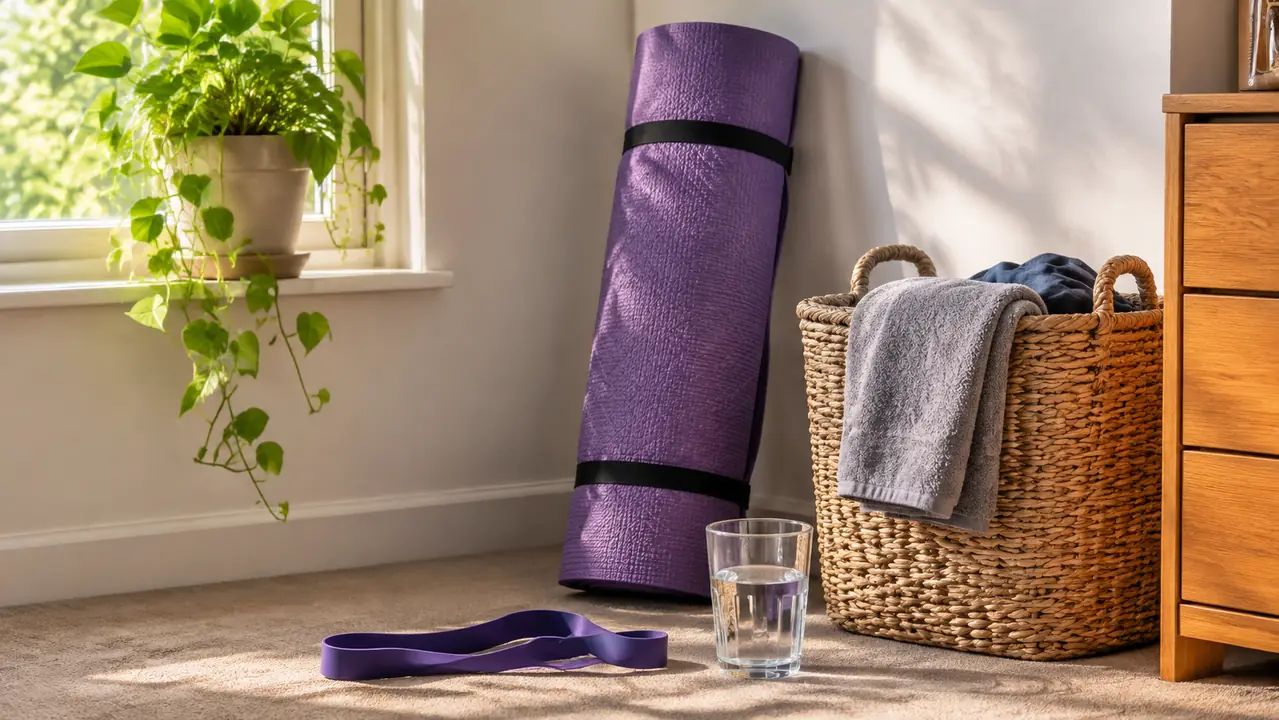
The mat lives rolled up in the corner of the spare room, next to a basket that holds my resistance bands. Three or four mornings a week I unroll it on the carpet, loop a band around my thighs, and spend 15 to 20 minutes on glute bridges, side steps and clamshells. It is not glamorous work, but it is the work that keeps my hips from stiffening up on the morning walks with Pepper, so it happens whether I feel like it or not.
My week has a shape to it now. Monday, Wednesday and Friday I am on it by about seven, before the day gets its hooks into me, and the Tuesday slot is the one that collapses roughly half the time because work runs late. When it collapses, I feel it by Thursday. Twenty minutes of bridges three times a week is the difference between walking down a hill comfortably and walking down it like a woman twice my age, and this mat is what made the twenty minutes repeatable.
On Saturdays it comes with me. The strap loops across my back and I walk to class with it, which sounds like a small thing until you have carried a rolled mat under one arm for six blocks in the cold. The listing puts it at 1.27 kg, and that is light enough that I forget it is there. Class runs an hour, mostly floor work with some kneeling and a short block of standing balance at the end.
The rest of the week it comes out for the odd bit of stretching in front of the television, or for the fifteen minutes of hip openers I do when my back feels tight. I wrote separately about why a thick mat suits a home Pilates practice, and I put this mat against the Retrospec Solana in a side-by-side comparison for anyone choosing between the two. Here I want to stay on what nine months of steady use has actually been like, because that is the part you cannot get from a listing photo.
What 10mm of NBR Foam Actually Feels Like
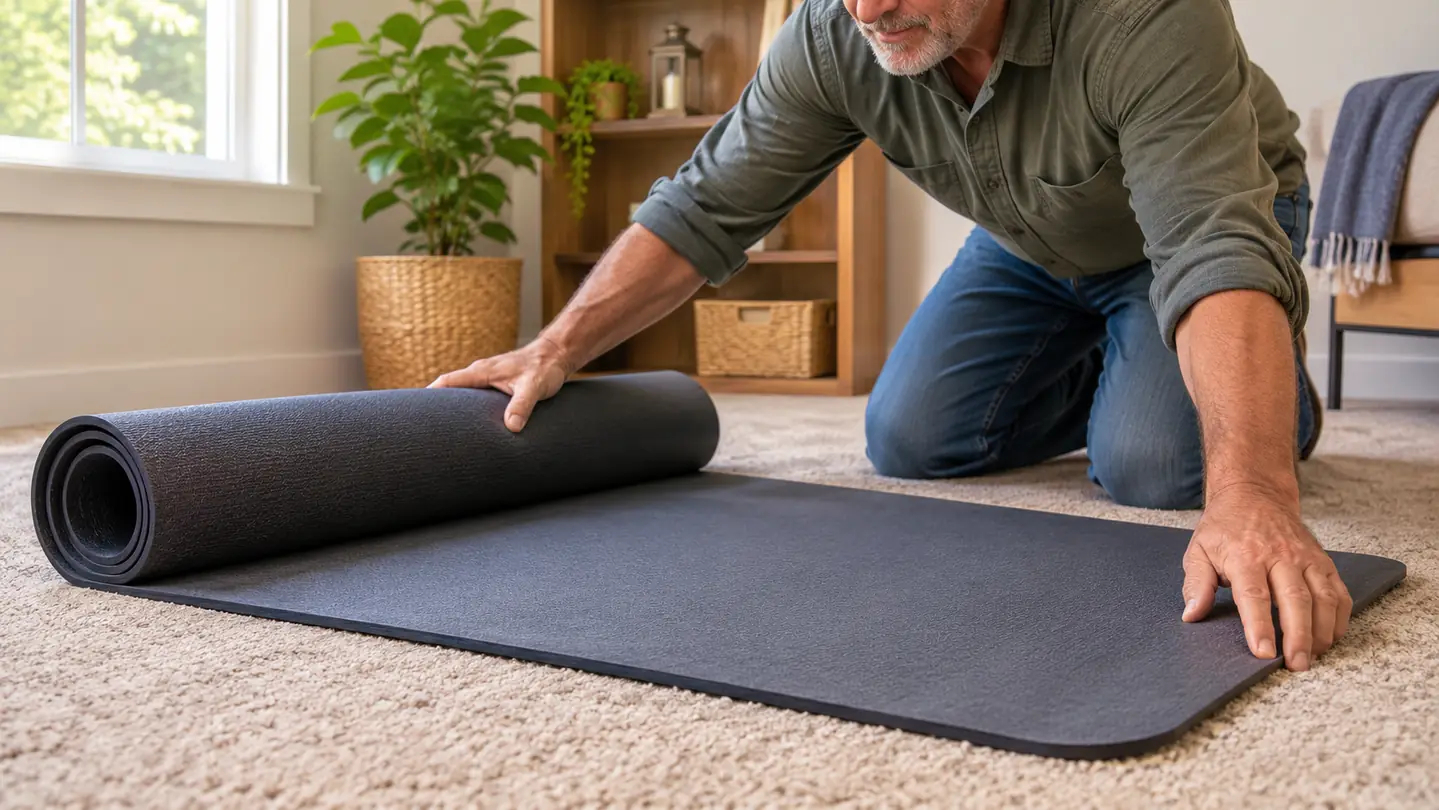
The listing calls it 10mm, which is about two fifths of an inch, and it is made from high-density NBR foam. Numbers on a page do not tell you much, so here is the version your knees care about: you do not feel the floor. On the carpet in the spare room, and on the harder studio floor on Saturdays, I can kneel through a full set of stretches and my kneecaps are not filing a complaint afterwards. On my old thin mat I could count the floorboards through my shins.
It is also not a marshmallow. There is a difference between thick and soft, and this sits on the denser side of thick. When I press a knee or a hip bone into it, the foam gives a little and then stops giving. That stopping is the whole point. A mat that keeps sinking eventually lets your knee find the floor through it anyway, and then you are lying on a thick mat that behaves like a thin one.
I tested that on purpose in the third week, because I did not trust the first impression. I knelt on one spot for a count of sixty, then rolled the mat a quarter turn and did the same in a fresh patch, and there was no difference: the same give, then the same stop. When I did it on the old thin mat, the pressure built up under the kneecap the way it does when you kneel on the floor and hope nobody notices you are kneeling on the floor.
The surface has a light texture, enough that my hands stay put in a plank and my feet do not skate during a kneeling lunge. I would not call it sticky, the way a thin travel mat can be. It is 72 inches long and 24 inches wide, and that is enough that my whole body fits when I lie back for a bridge, with room left at both ends. I am a shade under five foot five, so someone much taller should measure before assuming, but 72 inches is six feet and that covers a lot of people who are not me.
Where the Cushioning Earns Its Keep
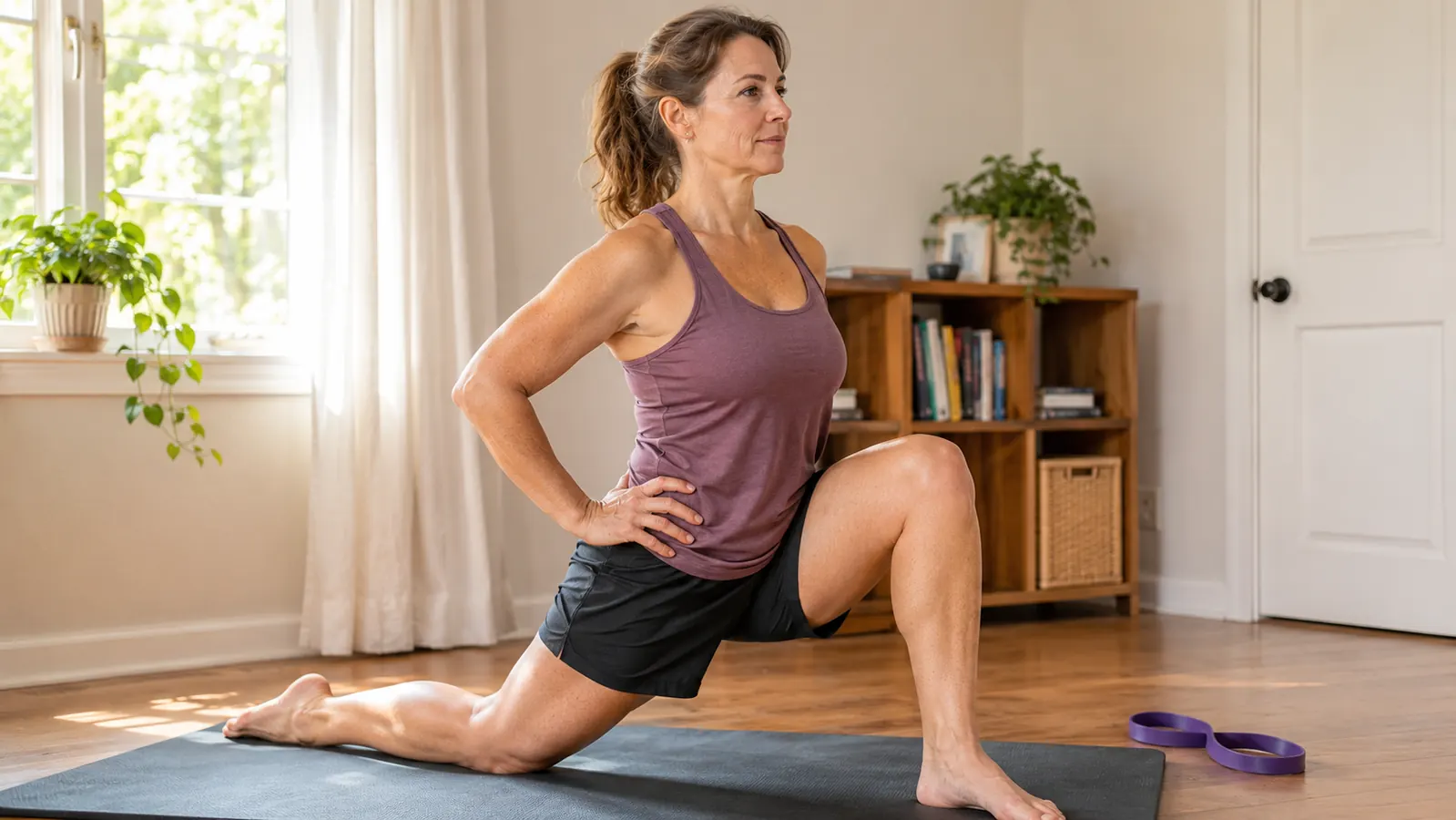
The honest case for this mat is not yoga. It is everything you do on your knees, your tailbone and your wrists. A thin mat is fine for a downward dog and miserable for a kneeling lunge, and this one flips that around. I can hold a kneeling hip flexor stretch for a full minute without shifting my weight from knee to knee, and the tailbone cushioning matters more at 48 than it did at 30, whether or not I like admitting it.
The band work is where it surprised me. Glute bridges on a bare floor used to leave my shoulder blades sore from the pressure point, and clamshells on my side used to grind my hip bone into the carpet. On the 10mm foam neither of those happens. It sounds like a small thing to say out loud, but it changes how willing I am to do the fourth set, and the fourth set is where the work is.
There is a specific morning I keep coming back to. It was a Tuesday in the spring, cold enough that the spare room held the chill, and I got down on the mat for a set of side steps with the medium band and finished the whole routine without once reaching back to rub my hip. On the floor I used to stop at twelve steps and call it twenty. That is not a before-and-after photo sort of result. It is the quieter kind, where the thing you stopped dreading is suddenly just part of the morning.
It also made the class floor work less of a negotiation. I used to spend the first five minutes of a kneeling sequence quietly rearranging myself, and now I just kneel. That is not a dramatic result. It is the kind of small, unglamorous improvement that decides whether you keep showing up in February.
Nine Months In: How It Has Held Up
I expected a foam mat at this thickness to start crumbling at the edges by spring. It has not. The surface is intact, no flaking, no bald patch where my knees go, and the corners are still square. There is a faint compression line where I always kneel, which seems fair enough after nine months of kneeling in the same spot.
It does hold a curl for the first few minutes after unrolling, especially when it has been rolled tight and stored cold. I unroll it when I get to class, go and put my shoes in the corner, and by the time I come back it is flat enough to work on. On the rare mornings when I unroll it at home and start immediately, I notice the ends lifting and I walk on them for a minute. In the first month I unrolled it the night before out of impatience, and it was flat the moment I stepped on it. I have not bothered since, because a minute of walking on the ends is easier than remembering to unroll it before bed.
Care is hand wash only, per the care instructions. I have not hand washed it yet. I wipe it down after class with a damp cloth and a drop of gentle soap, let it air over the back of a chair, and that has been enough for nine months of three or four sessions a week. Dust and carpet fibres collect on the foam more than I expected, and a wipe takes them off in a few passes. I suspect it will want a proper hand wash at some point this year. It is not machine washable, and if you were hoping to throw it in with the towels, this is not that mat.
The strap has held up better than I expected. It is a simple adjustable cinch, and the buckle has not slipped once on the walk, which is more than I can say for the strap on the mat I owned before this one. I check the stitching at the anchor points every couple of months, out of nothing more than habit, and nothing has frayed.
The Two Things That Bug Me
First, the smell. The listing warns you about it and the listing is right: there is a foam odor when you first open it, and it took about two days of airing out in the spare room before it faded. I unrolled it flat on the carpet with the window open for two afternoons, and by the third day I could only smell it if I put my face right down near the foam, which is a place my face does not otherwise go. If you are sensitive to smells, unroll it somewhere ventilated and leave it for a couple of days before you use it for anything where your face is near the mat.
Second, standing balance. Thick foam is a soft base, and a soft base moves under you. In the standing poses at the end of class, the ones where you are on one leg and the entire point is to be still, I can feel the mat yielding. It is not dangerous and I have not fallen, but it is a wobblier experience than a thin mat gives you, and it takes a bit of the point out of those poses. If your practice leans heavily on balance work, keep a thinner mat for that part of it.
I would add a third, softer complaint: it is bulky. Rolled up, it takes a real corner of a real room. That is the trade you make for 10mm, and I made it knowingly. But if floor space in your flat is already tight, look at the corner before you decide.
What I Liked
- 10mm of high-density NBR foam, so knees, tailbone and wrists do not find the floor
- 72 by 24 inches, which is enough room for a full bridge without hanging off either end
- The adjustable cinch strap actually holds on a walk, and 1.27 kg is light enough to forget
- Nine months in: no flaking, no crumbling edges, no bald patch under the knees
- Wipes down with a damp cloth and airs dry quickly between sessions
Where It Falls Short
- A foam odor for the first day or two, exactly as the listing warns
- A soft base means standing balance poses feel wobbly underfoot
- Bulky to store when rolled up in a small room
- Hand wash only, so it does not go in the machine
Nine months of kneeling on this mat and my kneecaps have not once complained. The wobble in standing balance is the trade, and I would make it again.
Who This Is For
This mat is for anyone whose knees, hips or tailbone are the thing that decides how long they stay on the floor. If you do floor-based strength work, Pilates, stretching or a home routine in a spare room, and the floor under you is carpet over concrete or plain hardwood, the 10mm makes a real difference. It suits a beginner or a returning exerciser who wants one mat that covers stretching, floor work and a weekly class without much thought. The Gaiam mat is also a reasonable choice for someone who has been making do with a towel on a hard floor and has decided that is over, which was exactly me last winter.
Who Should Skip It
Skip it if your practice is mostly standing balance, arm balances, or anything where you need a firm surface under your feet. A thin mat, or a thick mat with a thin one laid over it, will serve you better for those sessions. Skip it if you cannot air it out for two days after it arrives, or if you live somewhere with no corner to store a rolled mat. Skip it if you want something you can fold into a bag and take travelling, because this is not that. And if you want a mat for a fast, sweaty flow, you will find the foam a little vague under your hands when you are moving quickly. Choose it for the cushioning, not for grip.
If your knees decide how long you stay on the floor, start here
10mm of high-density NBR foam, 72 by 24 inches, a strap that holds on the walk and a weight you forget. Nine months in, mine has not flaked, crumbled or lost an edge.
Amazon Check Today's Price on Amazon →