
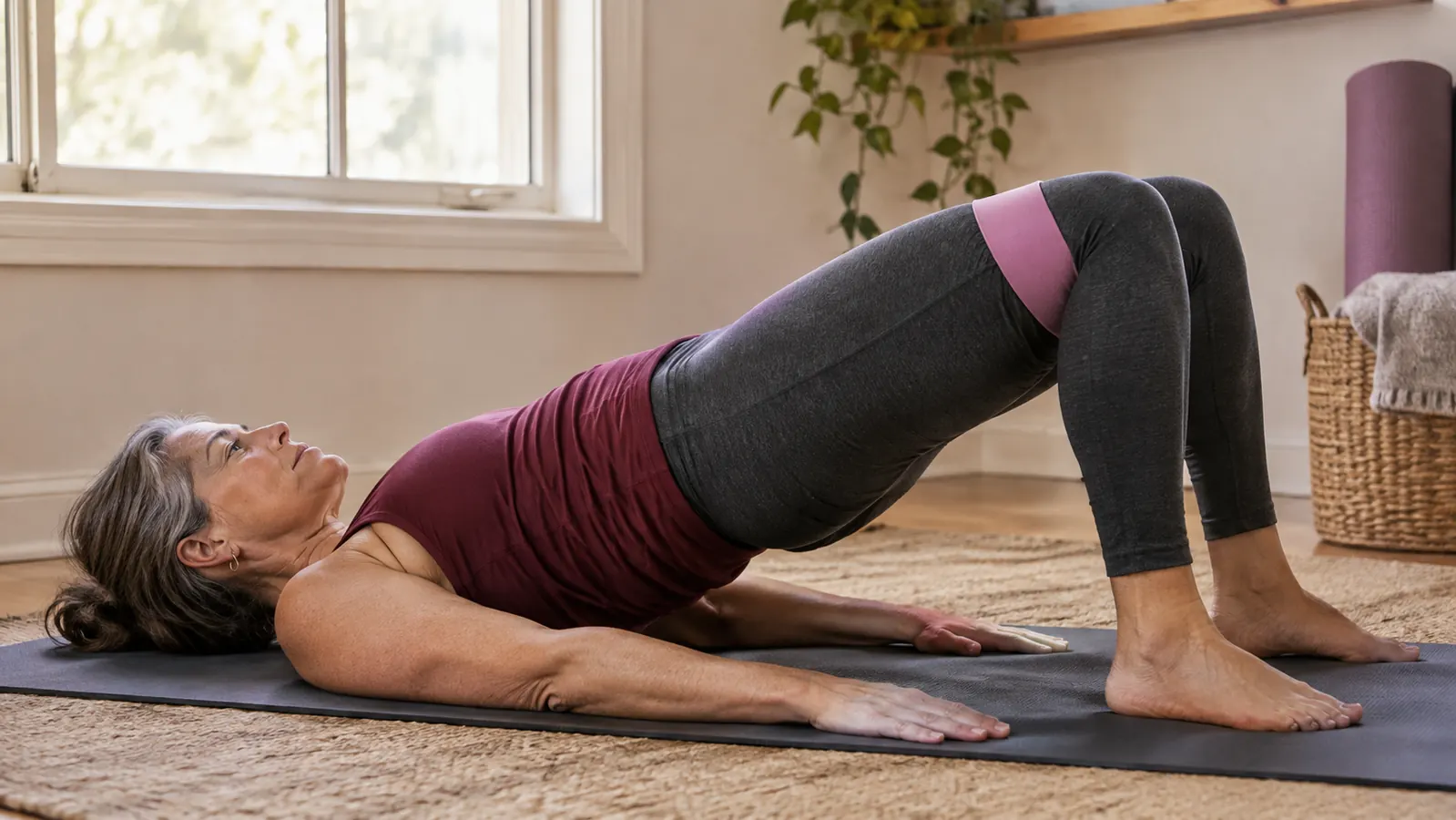
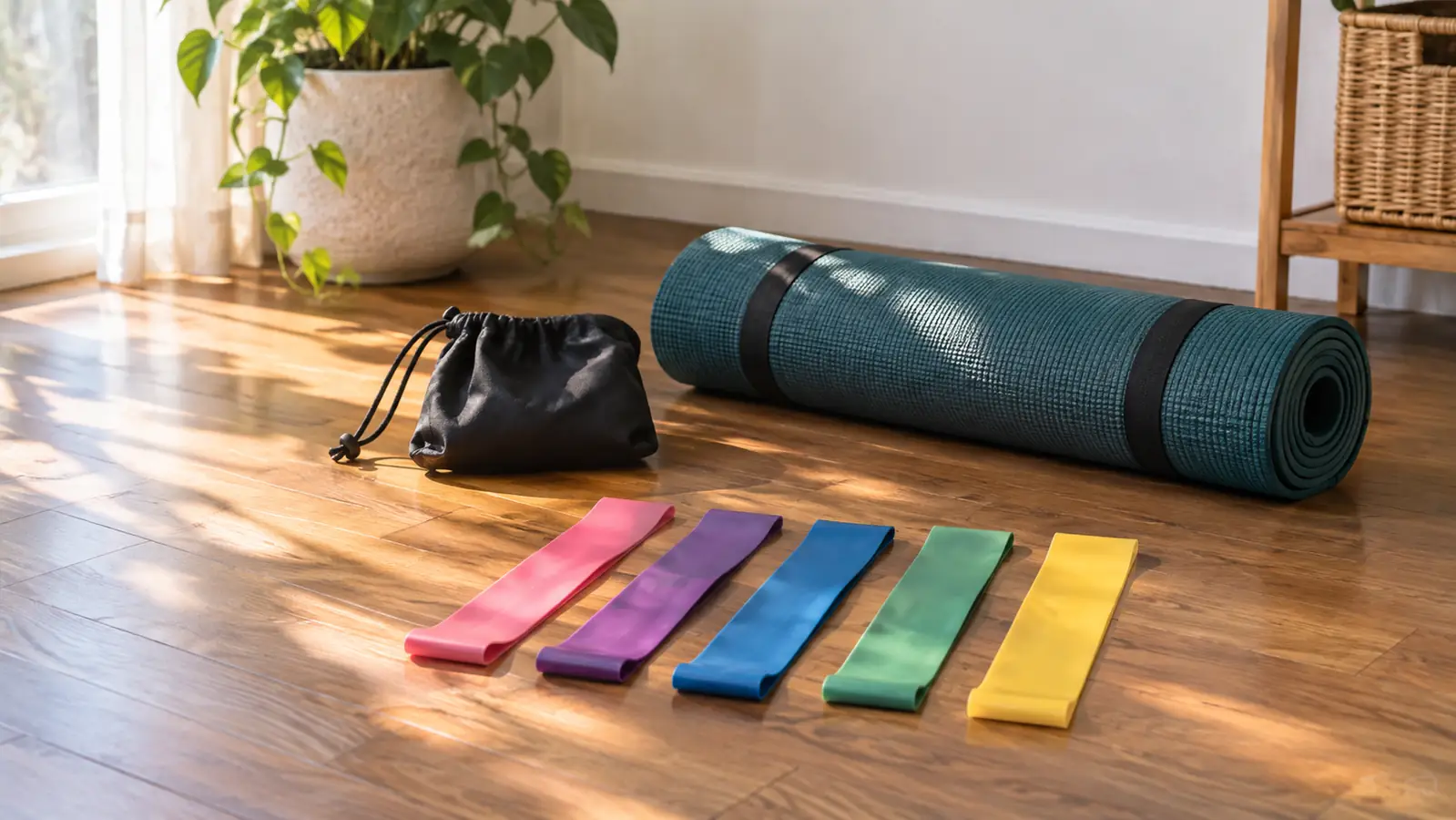
There are two kinds of resistance band in the basket in my spare room, and after eleven months of short workouts three or four times a week, I know which one I would buy again. The Fit Simplify Resistance Loop Bands: five flat latex loops, 12 inches by 2 inches, that came with a carry bag and a booklet of illustrated exercises. And the clip-on tube bands with handles, the kind that come with a door anchor and ankle straps. Both work. But only one of them gets picked up on a Tuesday when I have fifteen minutes and no patience for setup, and it is not the one with handles.
Here is the short answer before the long one. If your training is glute bridges, side steps, clamshells and squats on a mat in the spare room, the Fit Simplify loops are the better first buy, and they are the set I would replace first if mine went missing. If you want seated rows, pulldowns and curls with a grip that does not chew your hand, a handle set does those jobs properly and the loops do not do them at all. Most people doing short workouts at home need the loops first and the handles second, if they need them at all.
The Short Comparison
The catch with comparing these two is that loop bands are a fairly standard object while handle sets vary a lot. The one I own is a tube set with two foam handles, a door anchor, two ankle straps and carabiner clips. Yours may have a different anchor or no straps at all. So I have compared the jobs each one does rather than the exact contents of my bag. One note on the loops before the table: the Fit Simplify set arrived as five marked resistance levels, extra light through extra heavy, and the whole bag weighs 3.5 ounces, which is less than a mug of coffee.
| Fit Simplify Loop Bands | Tube Bands With Handles | |
|---|---|---|
| Changing resistance | Five loops. You drop one and pick up another, mid-set, in about a second. | Unclip a tube and clip in a heavier one, or add a second tube for a smaller jump. |
| Grip under load | The flat band bunches into the web of your thumb once the tension climbs. | Foam handles you can hold for a full set of rows without regripping. |
| Lower body work | Loops sit above the knees or around the ankles for side steps, clamshells and bridges. | Ankle straps work, but clipping and resizing them takes longer than stepping into a loop. |
| Kit you keep track of | Five loops and a carry bag. | Two handles, a door anchor, two ankle straps and the clips that hold them together. |
| Door anchor | Not needed. Nothing to attach to anything. | Needed for rows, pulldowns and anything you pull toward yourself. |
| Wear over a year | My lightest loop has stretched and no longer feels like the resistance it started as. | Tubes can fail at the clip, but a stretched loop just goes vague. |
Where Fit Simplify Wins
The first thing the loops win on is that there is nothing to set up. No anchor in a door frame, no clips to check, no straps to size. I step into the band, or pull it above my knees, and I am working. That sounds small until you have had a week where the only workout you get is the fifteen minutes between a work call and dinner. In eleven months I have never skipped a loop session because of setup. I have skipped a handle session because the anchor was still hanging on the door from the last time and I could not face fishing the clips out of the bag at half past seven in the morning.
There was one Tuesday in February that sums it up. I had a work call run long, I had twenty minutes before I needed to start dinner, and I had already talked myself out of doing anything. I went into the spare room, put the medium loop above my knees, and did three sets of side steps, three sets of glute bridges and two sets of clamshells. Nineteen minutes, start to finish, and I was back in the kitchen. With the handle set that same window would have been spent hanging the anchor, checking the clips and readjusting the ankle straps, and I would have done one exercise and given up on the other four.
The second win is lower body work, which is most of what I do. A loop goes above the knees or around the ankles in one movement, and then side steps, clamshells and glute bridges all work without adjustment. With the ankle straps I spend more time clipping, unclipping and resizing than I do stepping. The loop also stays put through a set of bridges, which the straps do not, and it does not need to be rethreaded when I swap from ankles to knees. If the goal is hips and glutes, the loops are the better tool for the shape of the movement, not just the cheaper one.
The third is the size of the whole thing. The set weighs 3.5 ounces and lives in a drawstring bag in a basket, which means it goes in a suitcase without a decision. The five resistance levels are marked, and I can tell them apart by feel now, mostly by which one I grab without looking. The booklet that came with the set has dozens of illustrated exercises for the days when I cannot think of what to do, which is more days than I would like to admit. There is no separate purchase needed to make the loops work.
Where Bands With Handles Win
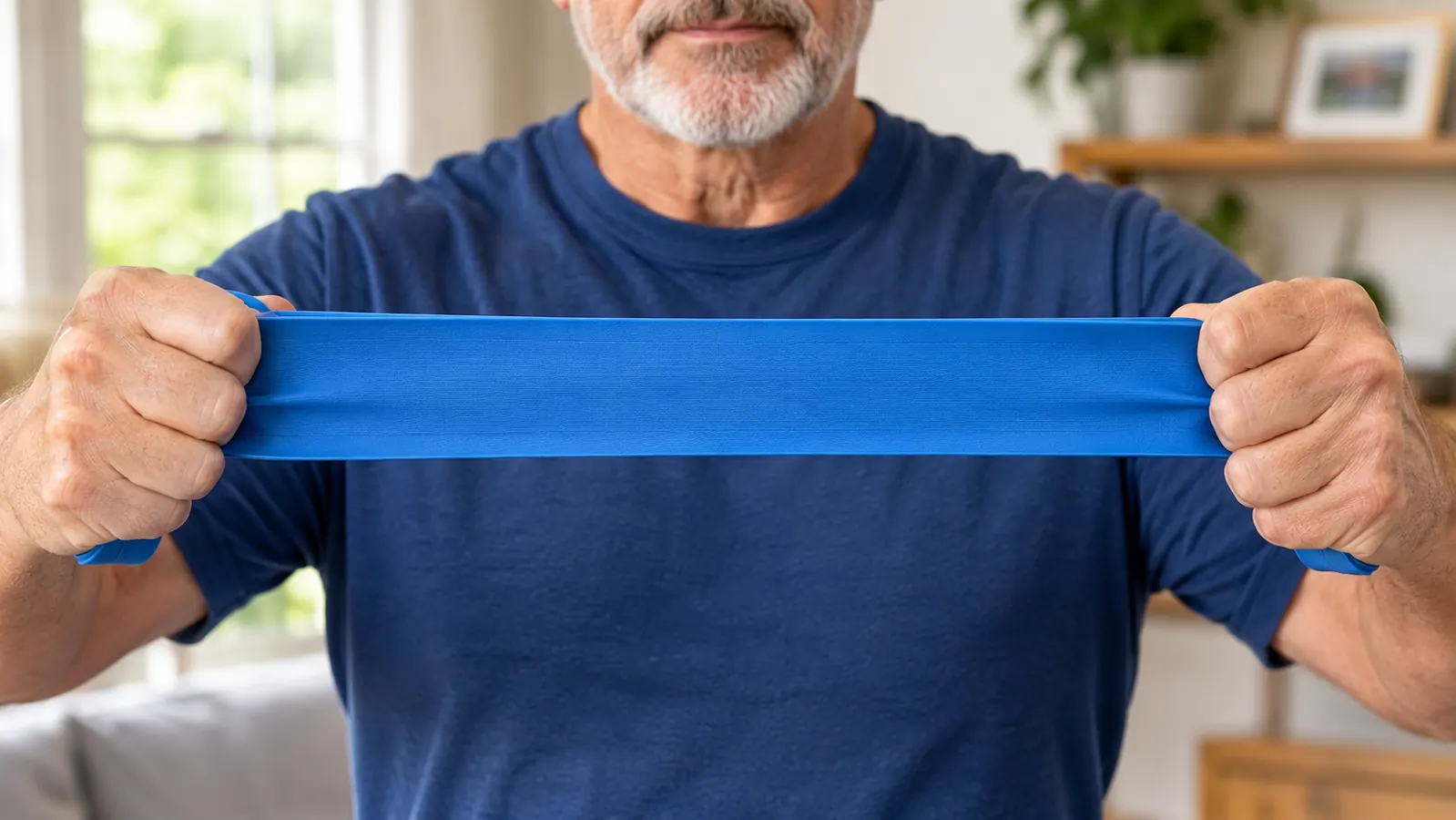
Handles win at the thing loops are worst at, which is pulling toward yourself with a closed fist. Rows, pulldowns, curls, face pulls. A flat band bunches in your hand under load and you spend the set regripping. The foam handle on the tube set lets me hold a full set of rows without thinking about my hand at all. I tested this properly last autumn. I tried to do a set of rows with the heaviest loop wrapped around a stair rail, and by the eighth rep the band had rolled into a thin cord across my fingers and I had to stop and reset my grip twice. If upper body pulling is a real part of your week, the loops will frustrate you and the handles will not.
The second advantage is finer progression. Five loops give you five steps, and the jump between them is noticeable once you are past the medium band. There is a gap between the medium and the heavy that I have never quite got comfortable with, and no way to land in the middle of it. Tubes stack, so you can clip a light tube alongside a medium one and land somewhere in between. When I wanted to load a squat heavier than my heaviest loop, adding a second tube did it in a way that five loops could not. And the door anchor opens up a whole category of exercises that a loop simply cannot do, from a standing row to a tricep pushdown, without any workaround involving a stair rail and a lot of hope.
If hips and glutes are the job, the loops are the tool
Five latex loops, five resistance levels, a carry bag and an illustrated exercise booklet. Nothing to anchor, nothing to clip, nothing to set up before a fifteen minute session in the spare room.
Amazon Check Today's Price on Amazon →What Eleven Months With the Loops Actually Looked Like
My routine is not impressive and I am not going to dress it up. Three or four mornings a week, fifteen to twenty minutes, in the spare room on a thick mat. Light and medium bands for clamshells, side steps and glute bridges. The heaviest loop only for squats, and only on days when my knees feel agreeable. That is the whole program. I am 48, I walk most mornings with my dog, and I go to one Pilates class on Saturdays. The bands are the strength part of the week and they have stayed the strength part of the week because they are easy to start.
What I did not expect was how much the first month would decide everything. I started with three sessions a week in the first week of January and told myself I would build up. What actually happened is that the first three weeks were five minute sessions, not fifteen, because I was learning where to put my feet and how far apart my knees needed to be to keep tension on a side step. By week four I could do the full fifteen without stopping to think. If I had started with the handle set, the first three weeks would have been spent working out the anchor height and the strap length instead, and I do not think I would have got to week four.
The set has held up otherwise. The medium band, which gets the most use by a wide margin, still snaps back the way it did in the first month. I wipe them down and put them back in the bag and that is the entire maintenance routine. They are latex, so if you have a latex allergy, skip this whole category and look at fabric loops instead. That is not a small note. It is the one thing that would make me tell you not to buy these.
In eleven months I have never skipped a loop session because of setup. I have skipped the handle set for exactly that reason.
The Two Complaints I Still Have
The first is that a loop rolls up the thigh during side steps. Not every time, and not with every pair of leggings, but often enough to be irritating. I stop, roll it back down, carry on. It happens most with smooth leggings and least with the thick cotton ones I wear in winter, so I have quietly started choosing what I wear based on what band work is on the plan. A wider fabric band would probably sit still, and I have thought about buying one for that reason alone. It has not been annoying enough to actually do it.
The second is that the lightest band has stretched. After eleven months it no longer feels like the resistance it started as, so I have started doubling it whenever I want actual tension. The other four are fine, and the two middle bands that do most of the work show no change at all. It is the band I use least, which makes it a minor complaint, but it is a real one and I would rather tell you than have you find out in month eleven.
How I Would Set Up a Week With Both
If you own both, the split that has worked for me is simple. Loops on the lower body days. Handles on the upper body day, and honestly upper body is one day a week for me, sometimes skipped entirely. The loops do not need the door, so they are the ones that travel and the ones I reach for when the week has gone sideways and I am three days behind on everything.
If you are starting from nothing, buy the loops and give them three months before you decide you need anything else. Most short home routines I know of are hips, glutes and a bit of squatting, and the loops cover all of it without a door anchor or a single clip. The handle set becomes worth owning when you specifically want to row, pulldown or curl, and not a moment before that. If you already know you want a pulling movement in the week, buying both at once is fine, as long as you are honest with yourself about which one will get used on a bad Tuesday.
Who Should Buy Which
Buy the Fit Simplify loops if your workouts are short, at home, and mostly lower body. If you want something you can do on a mat in the spare room with no anchor, no straps and no setup, in a set that fits in a bag in a basket, this is the one I would hand you. It also suits anyone who travels and wants something that goes in a carry on without a second thought.
Buy a tube set with handles if you already train upper body at home and want rows and pulldowns in the mix, or if you have outgrown five steps of resistance and want to stack tubes for smaller jumps. Buy both if you are the sort of person who actually follows a split and finishes it. Do not buy both if you are like me, because one of them will sit in the basket for months at a time and it will not be the loops.
The set that survived eleven months of Tuesdays
Five latex loops, five resistance levels, a carry bag and an illustrated booklet. No door anchor, no clips, nothing to set up before you start.
Amazon Check Today's Price on Amazon →