
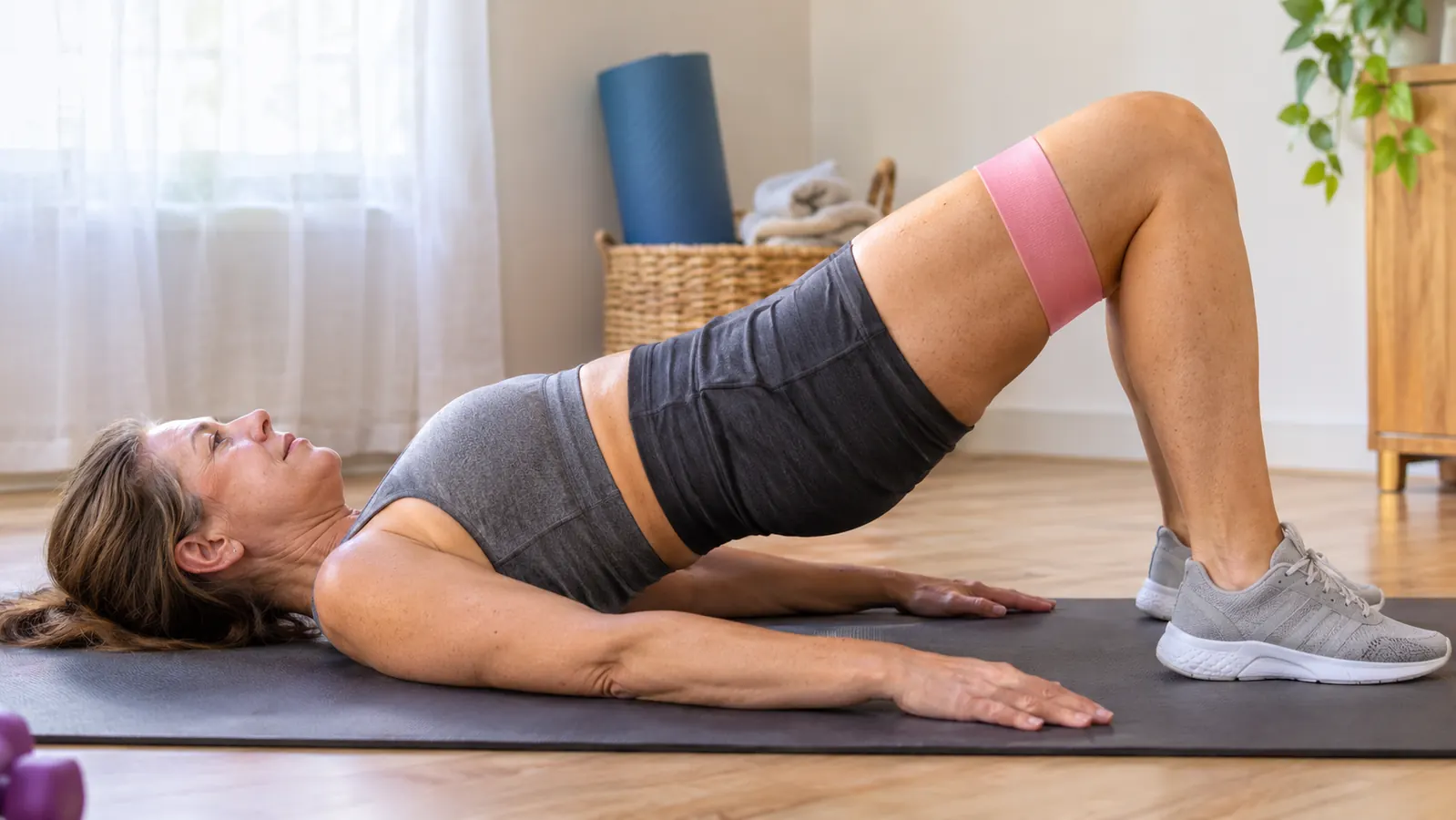
The Fit Simplify Resistance Loop Bands arrived in a carry bag small enough that I nearly threw it out with the packaging. Eleven months later that bag lives in a shallow basket in my spare room, and the five latex loops inside it get more use than anything else I own. I did not see that coming. I ordered them on a Tuesday because my Saturday Pilates class had made it very clear how weak my hips were, and I assumed I would use them for a month and then quietly forget where I put them.
I am 48, I work part time from home, and I do three or four short strength sessions a week in the spare room, fifteen to twenty minutes each. I am not a trainer and I am not training for anything in particular. What I wanted from loop bands was simple. Something I could grab between work tasks, use on the floor beside my mat, and put away before my husband Neil came home and tripped over it. The Fit Simplify set has done that job. It has also annoyed me in two specific ways, and I will get to both.
The Quick Verdict
The least complicated thing in my spare room and the one I reach for most. One band has gone soft and the loops roll during side steps, but eleven months of three weekly sessions have not broken a single one.
Amazon Check Today's Price →Five loops that fit in a drawer and still get used eleven months later
The set that lives beside my mat: five latex resistance levels, a carry bag and an instruction booklet I actually read in week one. Today's price is on the listing.
Amazon Check Today's Price on Amazon →How I've Used It
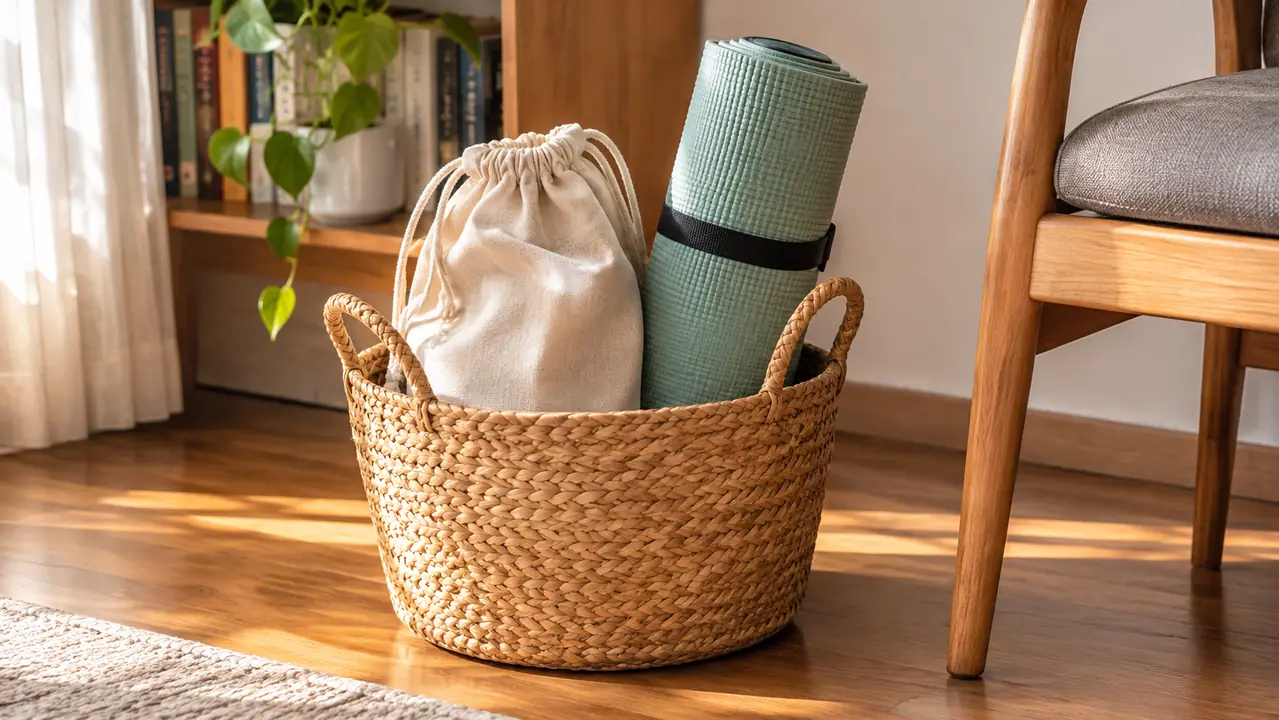
Three or four mornings a week, after Pepper and I get back from our walk and I have finished my coffee, I shut the spare room door and stay in there for fifteen to twenty minutes. The mat is already unrolled in the corner and the band bag sits in a basket beside it, which matters more than it sounds like it should. Equipment that has to be unpacked does not get used in this house.
I started with the light band because the booklet told me to, and I remember the first session clearly. Ten glute bridges, almost no sensation at all, and I assumed I had bought a useless set of rubber bands. The second session I moved up to the medium band, did twelve bridges, and could not sit down comfortably for two days. That was the moment I understood the levels are not decoration. These days I write the session on the back of an envelope before I start, because if I do not decide in advance which band goes with which movement, I default to the light one out of laziness and the whole fifteen minutes is wasted.
My routine is not complicated. Glute bridges with the medium band above my knees. Clamshells with the light band. Side steps across the room and back with the light band around my ankles. Squats with the heaviest band looped above my knees, which is the only thing I use that one for. Then everything goes back in the bag and I am at my desk before my inbox has properly filled up. I time it on the kitchen clock, and if fifteen minutes is up mid-set I finish the set anyway, because the point of the whole thing is that it is short enough that I never talk myself out of it.
On Saturdays the bag comes with me to Pilates, mostly because the studio bands are elderly and I got tired of fighting with them. The whole set weighs 3.5 ounces, so it disappears into my tote and I forget it is there until I need it.
What the Five Bands Actually Feel Like
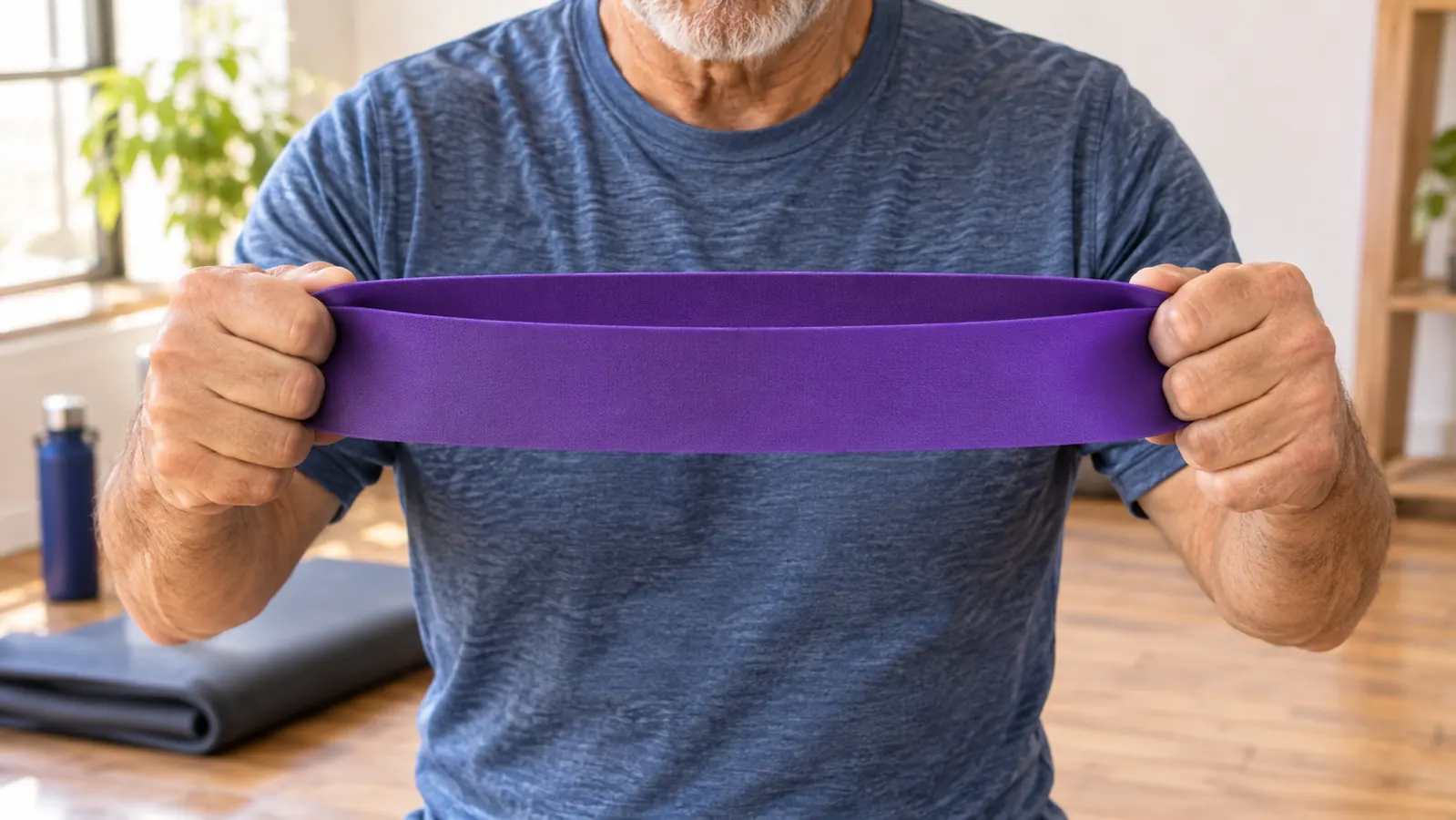
There are five levels in the set, from an extra light band up through the heaviest, and the step between each one is closer than I expected. The extra light and light bands are gentle enough that I can use them for clamshells and ankle work without my form falling apart halfway through the set. The heaviest band is a genuinely hard pull. Hard enough that I would not hand it to someone brand new and expect them to enjoy the first week.
To give you a sense of the spread, my working numbers are these. Twelve clamshells per side with the extra light band is a warm-up. Twelve with the light band is a real set, and by the last three my hip is complaining in the way it should. Side steps across the spare room and back, twelve steps each way, are manageable with the light band and impossible for me with the medium one, because my trailing leg cannot keep up and the loop starts to sag. Squats are the exception. Fifteen with the heaviest band above my knees is the hardest thing I do all week, and I only attempt it on a Saturday when I have time to sit down afterwards. Put differently, the jumps between bands are small enough to be useful and large enough to notice, which is a harder balance to strike than it sounds.
They are latex, 0.25 inch thick, and they smelled faintly of latex when new, which faded within a fortnight. The texture grips skin much better than it grips fabric, which is the root of the rolling problem I will describe below. Compared with the long flat therapy bands I used years ago in a physical therapy office, these are short loops that go around both legs rather than strips you anchor to something. In a small room, that is the right shape.
The instruction booklet includes dozens of illustrated exercises, which is more than I needed. I read it in the first week, tried four or five of the moves, and then went back to my own short routine. It is genuinely useful for someone starting from nothing. It is not a program, though, and it will not plan your week for you. If you already have a routine, the booklet will sit in the bag permanently. Mine does.
How They've Held Up Over Eleven Months
Nothing has torn. That is the headline for me, because latex loops in my experience either hold or they fail dramatically and leave you on the floor, and all five have held. The carry bag has stayed intact too, which surprises me more than the bands do, since the bag is a thin thing that gets shoved into a basket four times a week.
Storage is the reason they have lasted, I think. They live in the carry bag, the bag lives in a shallow basket, and the basket sits in a corner of the spare room away from the window. I have a friend who leaves her bands draped over a radiator and hers went tacky inside a year. Latex and heat are not friends, and a bag in a basket is a five second habit that costs nothing. I also check each band with my thumbs before I use it, stretching it out flat to look for a nick or a thin patch, the same way I would check a bike tyre. In eleven months I have found nothing. Not one thin spot, not one rough edge where the latex has started to go.
The lightest band has stretched. It is not a mystery why. That is the band I use most, three or four times a week for clamshells and side steps, and over eleven months it has gone soft enough that it feels like a different band from the one in the bag last spring. I still use it every session. I have just stopped counting it as resistance work and started counting it as warm-up work.
If I were buying again I would baby the light band and reach for the next one up more often, purely to spread the wear across the set. That is the sort of thing you only learn by using them for a year. The other four feel the same as they did in month two, and I put that down to the storage as much as the manufacturing. Any latex band left in a hot car will not last the summer, and no set at this level is built to survive that.
Eleven months, three or four sessions a week, and not one of the five loops has torn. The lightest has gone soft, which is a different problem from breaking, and I still use it every session.
The Rolling Problem, and What Fixed It
Here is the complaint. During side steps, the loop rolls up the back of my thigh and balls itself into something the width of a hair tie. The band does not grip my leggings, my legs are moving, and after ten steps I am bending down to re-seat it. This happened constantly for the first couple of months, and it is the reason I nearly wrote the whole set off.
I remember one morning in particular last August. I was doing side steps with the medium band over leggings and it rolled three times in twelve steps. I swore at it, took the band off, put it back in the bag and finished the session with the light band around my ankles instead, which is a completely different exercise and not what I had planned. That was the low point. The fix was not one thing but the three small adjustments below, and I would not have found any of them if I had thrown the set into a drawer in disgust, which I came close to doing.
Three things made it manageable. First, I moved the band from mid-thigh down to just above the knee, where my leg is narrower and there is less to slide over. Second, I slowed the steps down and widened my stance, which keeps the tension even instead of letting the band go slack and then snap. Third, on the worst days I wear shorts instead of leggings, because skin grips latex and polyester does not. That last one sounds trivial and it is the change that helped most. My leggings are the smooth kind, and the band goes across them like it is on ice. A cheap pair of cotton shorts holds it far better, and now the shorts come out whenever the session involves side steps. It still rolls occasionally. It just no longer ruins the session.
If you wear leggings and you do a lot of side steps, expect to re-seat the band now and then. It is a small irritation inside an otherwise dependable product, and it is the closest thing to a deal breaker I found across eleven months of use.
What I Liked
- Five resistance levels cover gentle hip work and a genuinely hard squat from one small bag
- Nothing has torn in eleven months of three or four weekly sessions
- The whole set weighs 3.5 ounces and travels to class in my tote without me noticing
- Latex gives a smooth pull with no jolt through my knees the way added weight does
- The instruction booklet is useful in week one if you have never used loops before
Where It Falls Short
- Loops roll up the thigh during side steps, especially over leggings
- The lightest band has stretched noticeably and now feels like warm-up gear
- Latex, so anyone with a latex allergy should skip them entirely
- The booklet runs out of road fast if you already have your own routine
How Fifteen Minutes at Home Compares to the Alternative
Before the bands, my home workout was bodyweight only, which meant squats my knees merely tolerated and side steps that did close to nothing. Adding a loop above the knees turned the squat from something I could do twenty times without noticing into something I feel for two days afterwards. That is the entire value of the set. It makes a small movement harder without adding a single piece of equipment to my spare room.
I looked at the alternatives before I bought. Dumbbells take up floor space and I would need several pairs to progress. The long flat therapy bands take two minutes to anchor to a door, and I know myself well enough to know that two minutes is where the routine dies. The Fit Simplify loops were the version of resistance I would actually pick up on a Tuesday morning, and eleven months of steady use is the proof of that.
The trade is that a loop band tops out. The heaviest band in the set is hard work for squats now, and there is no sixth level to graduate to. When it stops being enough, I will have to change the exercise rather than the band, which is a different kind of problem and one I am nowhere near yet. It is still worth knowing that the ceiling exists before you buy.
Who This Is For
This set suits anyone who wants resistance work that lives in a drawer. That means people doing short home strength sessions with no room for weights, people who have been told to do band work and want several levels to work through rather than one, and people like me who will not drive to a gym but will shut a door for twenty minutes. It also suits a beginner, because the booklet hands you a dozen illustrated places to start. Use a mat on a hard floor if your knees object to bridges, which mine do on bare boards.
Who Should Skip It
Anyone with a latex allergy should stop reading here. These are latex, there is no version of this set that works for you, and no clever workaround makes it safe. Skip them if what you want is heavy resistance, because a loop band is not a substitute for weight and it will not become one. Skip them if you know you will not do floor work, since the floor work is the whole product and no set of bands has ever made anyone do a clamshell. And if a band rolling up your thigh would send you round the bend, the long flat bands that anchor to a door are less fussy, though they take longer to set up and I would not use them myself.
If latex is your only objection, this is the set I would hand you
Five loops, a carry bag and an instruction booklet, still sitting in my basket eleven months on. Today's price is on the listing, and the light band is the one to go easy on.
Amazon Check Today's Price on Amazon →